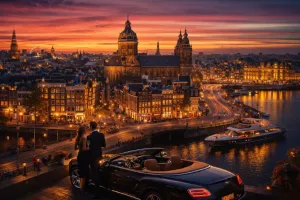
Kampen sits at the point where the IJssel river meets the former Zuiderzee, now the Ketelmeer, in the province of Overijssel. The city has roughly 48,980 inhabitants. As a member of the Hanseatic League from the 13th century, Kampen grew wealthy on trade, and the three surviving medieval city gates, the Koornmarktspoort, Cellebroederspoort, and Broederpoort, reflect that period. Over 500 rijksmonumenten line the streets of the old centre.
The Bovenkerk, a Gothic church from the 14th century, contains a Hinsz organ from 1743. The Kamper Kogge, a reconstruction of a medieval cargo vessel found in the IJssel, is moored at the waterfront. The Theologische Universiteit, associated with the Gereformeerde Kerken vrijgemaakt, has been based here for over a century.
Zwolle is about 15 kilometres south. The Flevoland polders stretch westward across the former sea. The Kampereiland, a polder island between river branches, is used for dairy farming.
Kampen sits at the point where the IJssel river meets the former Zuiderzee, now the Ketelmeer, in the province of Overijssel. The city has roughly 48,980 inhabitants. As a member of the Hanseatic League from the 13th century, Kampen grew wealthy on trade, and the three surviving medieval city gates, the Koornmarktspoort, Cellebroederspoort, and Broederpoort, reflect that period. Over 500 rijksmonumenten line the streets of the old centre.
The Bovenkerk, a Gothic church from the 14th century, contains a Hinsz organ from 1743. The Kamper Kogge, a reconstruction of a medieval cargo vessel found in the IJssel, is moored at the waterfront. The Theologische Universiteit, associated with the Gereformeerde Kerken vrijgemaakt, has been based here for over a century.
Zwolle is about 15 kilometres south. The Flevoland polders stretch westward across the former sea. The Kampereiland, a polder island between river branches, is used for dairy farming.
Country selected
Region selected
City selected
Drie platforms, één dominante marktpositie en circ...
Read more