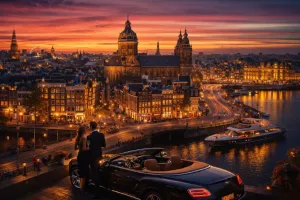
Before the Noordoostpolder was reclaimed in the 1940s, Vollenhove was a fishing port on the Zuiderzee coast. The land reclamation left the town stranded inland, its harbour silted and its maritime economy gone. About 8,200 residents remain. Two medieval churches and several 17th-century merchant houses along the Kerkplein recall the period when Vollenhove served as a seat of the Drost van Vollenhove, an administrative post under the Overijssel provincial government.
The Weerribben-Wieden national park, the largest peat marsh area in northwestern Europe, begins just east of town. Reed cutters, boat tours, and otters (reintroduced in 2002) characterise this wetland. Vollenhove hosts the annual Blokzijl-Vollenhove sailing race on the Vollenhover Kanaal.
Before the Noordoostpolder was reclaimed in the 1940s, Vollenhove was a fishing port on the Zuiderzee coast. The land reclamation left the town stranded inland, its harbour silted and its maritime economy gone. About 8,200 residents remain. Two medieval churches and several 17th-century merchant houses along the Kerkplein recall the period when Vollenhove served as a seat of the Drost van Vollenhove, an administrative post under the Overijssel provincial government.
The Weerribben-Wieden national park, the largest peat marsh area in northwestern Europe, begins just east of town. Reed cutters, boat tours, and otters (reintroduced in 2002) characterise this wetland. Vollenhove hosts the annual Blokzijl-Vollenhove sailing race on the Vollenhover Kanaal.
Country selected
Region selected
City selected
Drie platforms, één dominante marktpositie en circ...
Read more