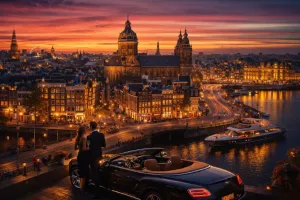
IJsselstein has approximately 33,900 residents and lies in the province of Utrecht along the Hollandsche IJssel river. The Kasteeltoren, a 14th-century tower that is the sole surviving element of the former castle of the lords of IJsselstein, is the town's landmark. The Grote Kerk dates from the 15th century. Despite its proximity to Utrecht, the old centre around the Kronenburgplantsoen retains a small-town atmosphere.
The town expanded considerably in the 1970s and 1980s as a Vinex-style dormitory for commuters to Utrecht and Amsterdam. The IJsselstein windmill, a working corn mill, stands near the river. The Hollandsche IJssel, a smaller branch of the IJssel system, winds through the polders south of the town.
Utrecht is about 15 kilometres north. Nieuwegein borders directly. The A2 motorway provides quick access to Amsterdam and 's-Hertogenbosch.
IJsselstein has approximately 33,900 residents and lies in the province of Utrecht along the Hollandsche IJssel river. The Kasteeltoren, a 14th-century tower that is the sole surviving element of the former castle of the lords of IJsselstein, is the town's landmark. The Grote Kerk dates from the 15th century. Despite its proximity to Utrecht, the old centre around the Kronenburgplantsoen retains a small-town atmosphere.
The town expanded considerably in the 1970s and 1980s as a Vinex-style dormitory for commuters to Utrecht and Amsterdam. The IJsselstein windmill, a working corn mill, stands near the river. The Hollandsche IJssel, a smaller branch of the IJssel system, winds through the polders south of the town.
Utrecht is about 15 kilometres north. Nieuwegein borders directly. The A2 motorway provides quick access to Amsterdam and 's-Hertogenbosch.
Country selected
Region selected
City selected
Drie platforms, één dominante marktpositie en circ...
Read more