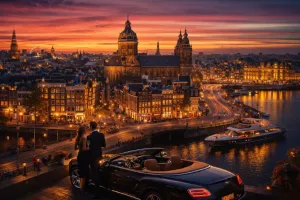
Rhenen has about 18,061 residents and lies in the province of Utrecht where the Utrechtse Heuvelrug meets the Lower Rhine river. The town's elevated position on the ridge provides views across the Betuwe. The Cunerakerk, a late-Gothic church with a prominent tower, is the main landmark. Rhenen was historically a centre of the tobacco industry, with several factories processing imported tobacco from the 17th century onward.
Ouwehands Dierenpark, a zoo on the Heuvelrug, is one of the largest employers and draws visitors from across the country. The Grebbeberg, a wooded hill on the town's western side, saw fierce fighting during the German invasion in May 1940 and is now the site of a military cemetery. The Blauwe Kamer nature reserve along the Rhine floodplain hosts free-roaming Konik horses and Galloway cattle.
Utrecht is about 30 kilometres west. Wageningen lies roughly 5 kilometres south across the Rhine. Veenendaal is approximately 10 kilometres north.
Rhenen has about 18,061 residents and lies in the province of Utrecht where the Utrechtse Heuvelrug meets the Lower Rhine river. The town's elevated position on the ridge provides views across the Betuwe. The Cunerakerk, a late-Gothic church with a prominent tower, is the main landmark. Rhenen was historically a centre of the tobacco industry, with several factories processing imported tobacco from the 17th century onward.
Ouwehands Dierenpark, a zoo on the Heuvelrug, is one of the largest employers and draws visitors from across the country. The Grebbeberg, a wooded hill on the town's western side, saw fierce fighting during the German invasion in May 1940 and is now the site of a military cemetery. The Blauwe Kamer nature reserve along the Rhine floodplain hosts free-roaming Konik horses and Galloway cattle.
Utrecht is about 30 kilometres west. Wageningen lies roughly 5 kilometres south across the Rhine. Veenendaal is approximately 10 kilometres north.
Country selected
Region selected
City selected

Drie platforms, één dominante marktpositie en circ...
Read more